
Science at Home
Enjoy these STEM Projects, Projects, Videos and Resources for TK-6th grade girls and boys!
Uncover the hidden rainbow of colors inside a simple black marker.
What you need:White coffee filters, washable markers (black and brown work best), a glass, water, and salt. Click the title above to access the detailed step-by-step instructions on the accompanying project page.
Watch colored water "walk" from cup to cup to create a rainbow.
What you need: 6 clear plastic cups, paper towels, water, and primary food coloring (red, yellow, blue).
Steps:
Line up the cups in a straight line. Fill cups 1, 3, and 5 with water ¾ full. Leave cups 2, 4, and 6 completely empty.
Add red drops to cup 1, yellow drops to cup 3, and blue drops to cup 5. Stir well.
Fold strips of paper towel into long rectangles.
Put one end of a paper towel strip into cup 1 and the other end into the empty cup 2. Repeat down the line.
Wait 1 to 2 hours and check back to see the water fill the empty cups and mix secondary colors.
The Science: Capillary action is the ability of a liquid to flow upward in narrow spaces—like the tiny gaps in paper towel fibers—defying gravity with the help of water molecule cohesion and adhesion.
Magic Milk
Watch colors dance and swirl while learning how soap breaks surface tension.
What you need:
Whole milk, food coloring (red, yellow, blue), dish soap, cotton swabs, and a shallow plate or bowl.
Steps:
Pour enough milk into the plate to cover the bottom.
Add a few drops of different food colors close to the center.
Dip the tip of a cotton swab into dish soap.
Touch the soapy swab to the center of the milk and hold it there for 10–15 seconds.
The Science: Milk contains tiny drops of fat. Dish soap chases and attaches to the fat molecules, making them move and swirl the colors all around.
This model demonstrates how melting polar ice affects global sea levels.
What you need: Two shallow containers or bowls, modeling clay, ice cubes, and water.
Click the title above to access the detailed step-by-step instructions on the accompanying project page.
Greenhouse Effect in a Jar
This experiment shows how greenhouse gases trap heat in Earth's atmosphere.
What you need: Two large glass jars or 2-liter bottles, two thermometers, baking soda, vinegar, and a desk lamp.
How to do it:
Tape a thermometer inside each jar so you can read the numbers from the outside.
In the first jar, mix 7 grams of baking soda and 50 ml of vinegar to create carbon dioxide gas. Leave the second jar empty as your control.
Quickly seal both jars.
Place a lamp equally close to both jars and turn it on.
Check the temperature every 5 minutes for 20 minutes. The jar with carbon dioxide will trap more heat and show a higher temperature.
Fizzing Shells (Ocean Acidification)
This is a sensory favorite because it involves instant, exciting fizzing and bubbling.
What you need: White vinegar, water, two clear cups, and two pieces of white chalkboard chalk (chalk is made of old sea shells!).
How to do it:
Fill Cup 1 with plain water. Fill Cup 2 with vinegar (representing a changed, acidic ocean).
Let your child drop a piece of chalk into each cup at the same time.
Watch Cup 2 instantly fizz, bubble, and start to break apart, while the chalk in the water stays perfectly safe.
Concept: The ocean absorbs bad air, which makes the water "fizzy" and angry. This makes it really hard for sea animals like crabs and clams to keep their shells strong.
The "Super-Slick" Lotus Leaf Challenge
The Nature Lesson: Lotus leaves have a special, microscopic bumpy texture that repels water. Instead of soaking in, water beads up into perfect little balls and rolls right off, taking dirt with it. This is called the "Lotus Effect" and it inspired water-resistant coats and self-cleaning paint!
What You Need:
A bumpy, waxy leaf from your kitchen or garden (broccoli, cabbage, kale, or collard greens work best!).
A piece of regular printer paper.
An eyedropper, a straw, or a spoon.
Water.
The Activity:
Place the waxy vegetable leaf and the regular paper flat on the counter.
Gently drip a few drops of water onto the paper. Watch how it immediately starts soaking in and making the paper soggy.
Now, drip water onto the broccoli or kale leaf.
Have your child gently tilt the leaf. Watch the water bead up into little "marbles" and slide right off without leaving a trace!
The Challenge: Ask them to find other items in the house that act like the lotus leaf (like a rain jacket, a plastic bag, or a silicone mat) and compare them to things that act like the paper (like cotton shirts or towels).
The "Sticky Burr" Hook-and-Loop Test
The Nature Lesson: In the 1940s, an engineer went for a hike and noticed tiny burrs (seed pods) sticking to his dog's fur. When he looked under a microscope, he saw they had tiny hook shapes at the ends! This direct observation led to the invention of Velcro.
What You Need:
A few fuzzy items from around the house (wool socks, felt fabric, a fleece blanket, or a cotton ball).
A few "bumpy" items (a hairbrush, a plastic comb, pipe cleaners, or actual Velcro if you have a shoe or jacket with it).
The Activity:
Give your child the fuzzy "animal fur" materials and the bumpy "burrs."
Let them experiment with pressing the different combs and brushes against the socks or fleece.
The Challenge: Ask them, Which comb bristles stick the best? Why? Challenge them to design their own simple "fastener" using pipe cleaners and felt. Can they twist the pipe cleaners into tiny hooks to see if they hold onto a fleece blanket?
The Kingfisher Splash Challenge
The Nature Lesson: Japan's high-speed "bullet" trains used to make a deafening, thunder-like boom when exiting tunnels because they pushed a wall of air ahead of them. An engineer who loved birdwatching noticed that the Kingfisher bird could dive from the air straight into water with barely a splash. By redesigning the nose of the train to match the long, wedge-shaped beak of the Kingfisher, they made the train quieter and faster!
What You Need:
A deep tub, bucket, or sink filled with water.
A flat-bottomed plastic cup.
A round ball (like a tennis ball or golf ball).
Aluminum foil.
The Activity:
Fill a bowl or sink with water.
Have your child push the flat bottom of the plastic cup straight down into the water quickly. Notice how much splash and resistance (pushback) there is.
Next, push the round ball into the water.
Now, mold the aluminum foil into a long, pointed cone shape (just like a Kingfisher's beak) and pierce the water with it.
The Challenge: Ask your child: Which shape went into the water the smoothest and made the smallest splash? Why would this shape help a train cut through air more quietly?
Tip for parents: The goal of biomimicry isn't just to build a perfect replica of a leaf or a bird beak—it's about learning to observe closely. Encourage them to sketch what they see in a "nature notebook" just like a real engineer!
STEM Wars: Create a Mini LED Lightsaber That Glows Across the Galaxy
This mini LED lightsaber project is a fun and beginner-friendly STEM activity that introduces students to the basics of electrical circuits and energy flow. By building a simple light-up device, participants will learn how batteries, LEDs, and conductive materials work together to create a working circuit. Click the title above to access the detailed step-by-step instructions on the accompanying project page.
STEM Wars: Design and Build Your Own Paper Airplane Launcher
This paper airplane launcher project introduces students to the basics of engineering, force, motion, and aerodynamics. By designing and building a simple launcher, participants will explore how energy and propulsion affect a paper airplane's speed and distance. Click the link to watch a video of the project in action.
STEM Wars: Forge Your Own Galactic Starburst Slime
This edible Starburst slime project is a fun, beginner-friendly STEM activity that introduces students to the basics of chemistry, states of matter, and sensory science. By melting and transforming candy into a stretchy, slime-like material, participants will explore how heat changes substances' properties and textures while learning about mixtures and material transformations. Click the link to see the slime-making process in action.
Edible Science: Make Butter from Scratch!
In this hands-on activity, kids not only shake up something tasty but also learn how motion and molecules work—we’re talking homemade butter in a jar. It’s simple, edible, super holiday-friendly, and a perfect way for families to explore science together.
Cranberry Oobleck: Squishy Science Fun!
Celebrate the season with this festive Cranberry Oobleck activity! Kids can make bubbly cranberry oobleck by blending cornstarch with jellied cranberry sauce—a tactile, festive way to explore how some mixtures act like both solids and liquids.
Terysa Solves It - Coding Adventure
In these fun and educational videos, young learners will have a blast mastering coding concepts while dancing along to the rhythm!
Science Videos made by SAfG Staff
Stay hands-on with our easy-to-do STEM mini-lessons using household items!
Circular Reasoning: Finding Pi
Examine circular objects and see what you can discover about their sizes. As you explore, you might be surprised at how useful the results can be—maybe it will inspire you to save up for a bike with bigger wheels!
Dancing Boxes
Transform an ordinary cardboard box into a dancing toy! In this activity by The Exploratorium, playfully explore 4 bar linkages by taking advantage of the shape and structure of a thin cardboard box.
Simple STEM Activities
Check out more videos of fun STEM activities and projects!
Coding? It's child's play
Play the SAfG Coding Board Game!
Play Microscopya!
Microscopya is a science video game exploring the inside of the cell! Featuring hand-drawn illustrations and puzzles based on real scientific concepts, the game aims to highlight the depth, complexity, and beauty of what makes life possible.
Storytime Science
View our list of storybook reading videos and websites with free storybook readings!
STEM Websites & Shows for Kids
View our list of recommended STEM-related websites and shows!
Daily STEM Challenges
Can you complete one of our STEM Challenges everyday? How many will you do?
Mission Unstoppable with Miranda Cosgrove
Be inspired by female STEM (Science, Technology, Engineering and Math) superstars in leading fields including social media, entertainment, animals, design, and the internet.
Get Inspired with AstraFemina
Access inspirational videos, powerful stories and STEM resources by AstraFemina.
STEM Quick Wins
A library of free, relevant science, technology, engineering, and math activities that can be done at home or other locations with easily accessible materials.
Howtosmile
An online collection of math and science activities available to anyone, free of charge.

From our “Flower Dissection” Lesson

Watch SciGirls episodes to learn more about topics like Science, Technology, Engineering and Math (STEM)!
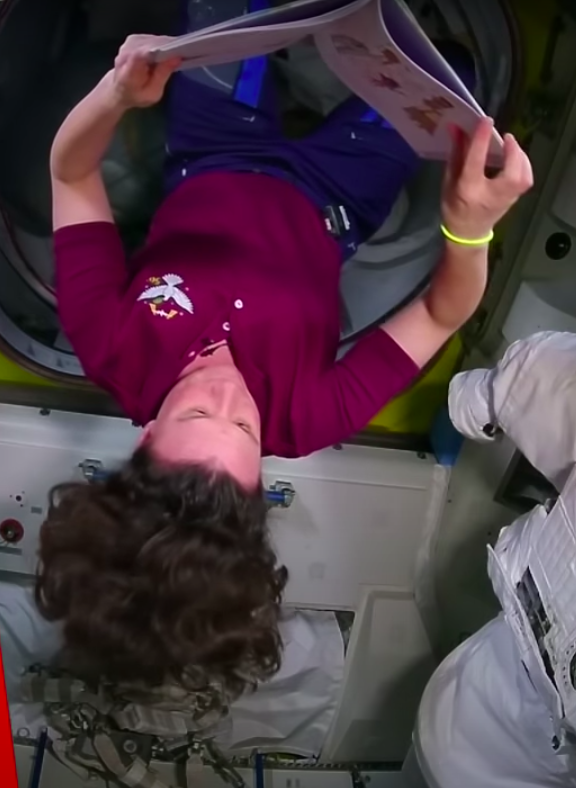
You can watch astronauts read story books in space like Ada Twist, Scientist

From Grace’s Science Place video about color changing flowers and celery!

This second grader participated in our STEM Challenge and drew her favorite flower, a sunflower!